Best Mixing Bowls for Sourdough (2026 Picks)
CrumbPath is reader-supported. When you buy through links on our site, we may earn an affiliate commission — at no extra cost to you.
Short answer: for most sourdough bakers, a set of large stainless steel mixing bowls is the best buy — light, unbreakable, easy to clean, and big enough for a high-hydration dough to double without climbing out. Glass is the best second bowl for watching fermentation, and ceramic wins on looks and stability but loses on weight and breakability. If you buy only one thing from this guide, buy a large (5 to 8 quart) stainless bowl with a grippy base and a lid.
This guide compares the main bowl types on the things that actually matter for sourdough — size, grip, pouring, cleaning, and how they handle a sticky 80% hydration dough — and it is based on published specifications and reported baker features, not on lab testing claims. A mixing bowl is the least glamorous tool in sourdough baking, and also one of the most used: every loaf passes through it at least twice, so getting it right pays off daily.
Why Bowl Choice Matters More Than You Think
A bowl that is too small is the most common beginner mistake. Dough needs room to be folded without slopping over the edge, and to rise by 50 to 75% during bulk fermentation without touching the cover. For a standard 500 g flour loaf, a 4 quart bowl is the bare minimum and a 5 to 6 quart bowl is comfortable; for double batches, go to 8 quarts. Straight-sided bowls are better than sloped ones for judging rise, because a straight wall makes a 50% increase visible rather than guessable — the same reason we recommend straight-sided containers for tracking fermentation in our beginner bread recipe.
Weight matters in both directions. A bowl that is too light slides across the counter during mixing; a bowl that is too heavy is awkward to lift and pour from when the dough is sticky. Grip features — silicone bases, handles, and pouring spouts — sound like marketing details until you try to scrape a wet dough out of a smooth, spinning bowl with floured hands.
The Bowl Types Compared
Stainless Steel: The Workhorse
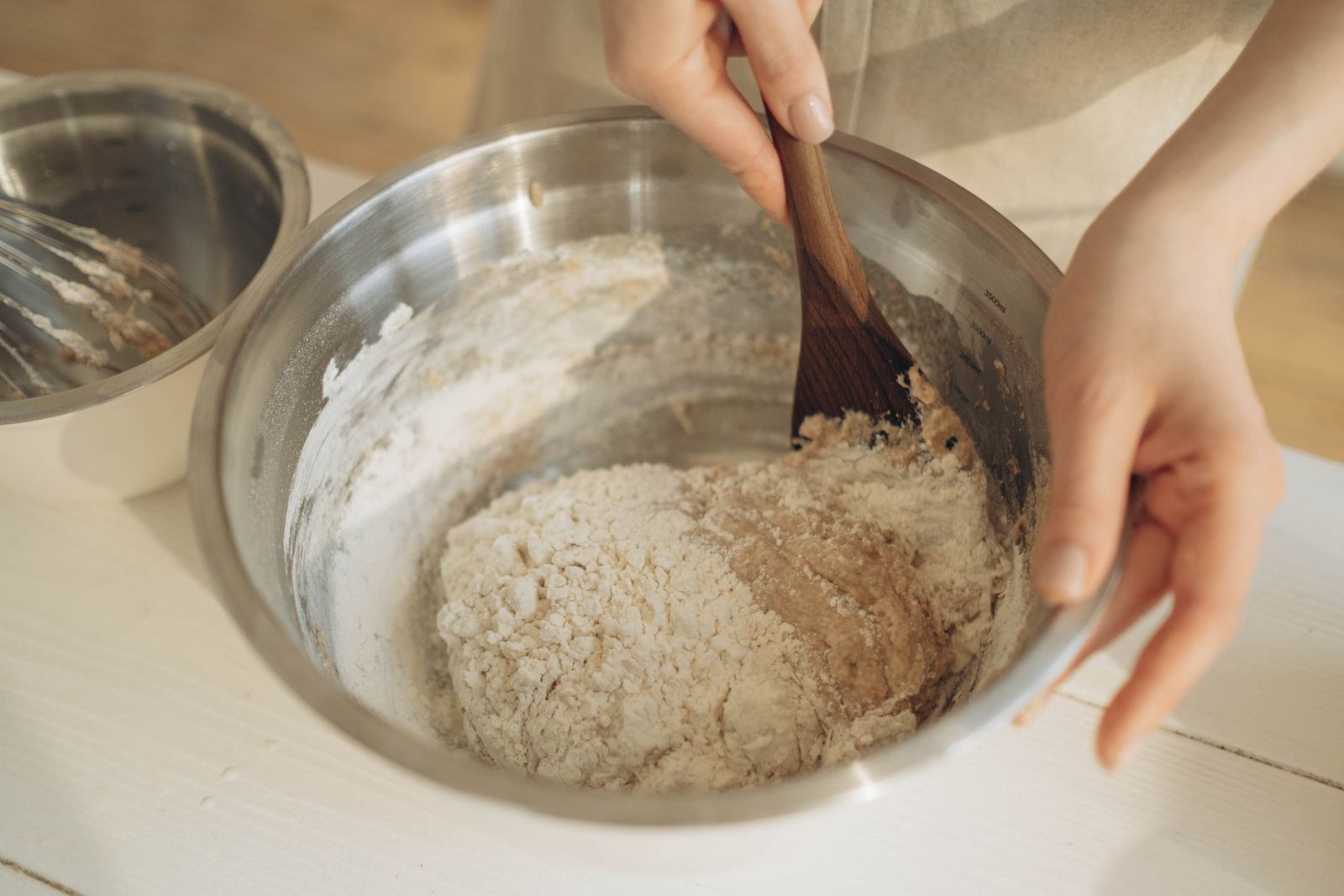
Stainless bowls are light, nearly indestructible, and easy to clean, and they do not absorb odours or stains from acidic dough. Their downsides are real but manageable: they slide on counters unless they have a silicone base, they cannot go in the microwave, and you cannot see fermentation through them. For mixing, folding, and autolyse, they are the default choice of most serious home bakers, and a stainless steel mixing bowl set is the best value entry point because it covers small prep tasks too.
Glass: The Fermentation Watcher
Glass bowls let you watch bubbles forming through the side of the dough — genuinely useful when you are learning to judge bulk fermentation by eye, as described in our stretch-and-fold guide. Glass is also microwave-safe and non-reactive. The trade-offs are weight and breakability: a large glass bowl full of dough is heavy, and a dropped one is a kitchen hazard. A large glass mixing bowl makes an excellent second bowl even if stainless does your daily work.
Ceramic and Stoneware: The Beautiful Option
Ceramic bowls are heavy, stable, and attractive enough to leave on the counter — and their weight means they never slide during mixing. But they chip, they crack if dropped, they are the hardest to pour from when full, and good ones cost more than steel or glass. A ceramic mixing bowl is a pleasure to own; it is rarely the most practical first buy for sourdough.
Plastic: The Budget Pick With Caveats
Plastic bowls are cheap, light, and unbreakable, but they scratch, they absorb odours and stains over time, and acidic sourdough can leave them smelling faintly sour no matter how well you wash them. They are fine as a starter bowl or a backup, but most bakers outgrow them quickly. If you do buy plastic, choose BPA-free, and keep it out of the dishwasher's hottest cycle to slow warping.
Comparison Table
| Bowl type | Best for | Size to buy | Grip / pouring | Cleaning | Watch fermentation? | Price range |
|---|---|---|---|---|---|---|
| Stainless steel | Daily mixing, folding, double batches | 5–8 quart | Good with silicone base; spouts vary | Excellent, dishwasher-safe | No | $–$$ |
| Glass | Watching bulk fermentation, microwave use | 4–5 quart | Fair; heavy when full | Excellent, dishwasher-safe | Yes | $–$$ |
| Ceramic / stoneware | Stability, countertop looks | 4–5 quart | Excellent stability; hard to pour | Good; hand wash preferred | No | $$–$$$ |
| Plastic | Budget starter bowl, backup | 4–6 quart | Good; light but can flex | Fair; stains and odours over time | No (opaque) | $ |
| With lid / measurements | Covering dough, tracking rise | 5–6 quart | Good; lid doubles as cover | Good; wash lid separately | Sometimes (if clear) | $$ |
Features Worth Paying For
- A lid. Covering dough with a lid beats cling film every day — no plastic waste, no film sticking to risen dough. A mixing bowl with a lid is the single most useful upgrade over a bare bowl.
- Measurement markings. Bowls with quart and litre marks printed or etched inside help you judge rise without a separate container. A dough rising bowl with measurements is ideal for bulk fermentation tracking.
- A silicone or non-slip base. This stops the bowl skating across the counter during mixing — a small feature that matters every single bake.
- A pouring spout and handle. Useful for batters and discard recipes, less essential for stiff dough, which you will scrape out with a bench scraper anyway.
- Nested sets. A set of three or four sizes covers prep, starter feeding, and dough in one purchase — and nests for storage. Just make sure the largest bowl in the set is genuinely large (5+ quarts); many sets top out at 3 quarts, which is too small for a loaf.
What About AliExpress?
AliExpress is worth evaluating for mixing bowls, and the honest verdict is mixed. Stainless bowl sets and silicone-based bowls are widely listed there at prices well below name-brand equivalents, and for a simple stainless bowl there is little proprietary technology to pay for — a bowl is a bowl. The risks are the usual ones for kitchenware from a marketplace: thinner steel gauges than advertised, silicone bases that peel, lids that do not seal, and long shipping times that make returns impractical. If you order bowls there, buy from a seller with many kitchenware reviews, check the stated steel thickness and capacity rather than trusting the headline size, and treat it as a budget experiment rather than a guaranteed equivalent. For most bakers, a locally available stainless set with a clear return policy is the safer first buy, and AliExpress is best for a second or backup bowl where a sizing surprise costs little.
How Bowls Fit the Rest of Your Kit
A bowl does not work alone. You will mix in it, fold in it, and scrape dough out of it into a banneton or a proofing basket with liner for final proof; you will weigh flour into it on a kitchen scale; and you will bake from it into a Dutch oven. If you are building a kit from scratch, our starter kit guide ranks the order to buy in — and a large bowl sits near the top, ahead of several more glamorous tools. Bowl size also interacts with recipes: our focaccia and pizza dough both ferment happily in the same 5 to 6 quart bowl as a lean loaf, so one good bowl covers most of the repertoire.
Care and Cleaning
Stainless and glass bowls go straight in the dishwasher, though hand-washing preserves measurement markings longer. Soak stuck dough in cold water first — hot water cooks flour onto the surface and makes it harder to remove. Dry stainless bowls fully before stacking to avoid water spots, and never store a damp bowl nested inside another, which traps moisture and odours. Ceramic bowls should be hand-washed and checked for chips regularly; a chipped rim can harbour bacteria and scratch counters.
Frequently Asked Questions
What size mixing bowl do I need for sourdough?
For a single 500 g flour loaf, a 5 to 6 quart bowl is ideal — room to fold and room to rise. A 4 quart bowl works but gets tight during folding. For double batches, go to 8 quarts. When in doubt, buy bigger: an oversized bowl is a minor inconvenience, an undersized one is a mess.
Is stainless steel reactive with sourdough?
No. Food-grade stainless steel is non-reactive with acidic dough, unlike aluminium or copper, which can react and discolour. Stainless is safe for long ferments, including overnight doughs.
Can I ferment dough in the bowl I mixed it in?
Yes, and most bakers do. Cover it with a lid, damp cloth, or shower cap and ferment in the same bowl — one less vessel to wash, and the dough is already at home. Just make sure the bowl is big enough for the rise.
Do I need a special dough-rising bucket instead?
Not necessarily. Straight-sided buckets with litre markings are excellent for judging rise precisely, and many advanced bakers use them. But a large straight-sided bowl with markings does the same job for most home bakers, and it doubles as a mixing bowl — one tool instead of two.
The Verdict
Best overall: a large stainless steel bowl set (5 to 8 quarts) with a silicone base and lids. It is light, unbreakable, easy to clean, and big enough for any home sourdough batch, and a set covers prep work too. Best second bowl: a large glass bowl for watching fermentation when you are learning to read your dough. Best for looks: ceramic, if you accept the weight and the price. Skip plastic as your main dough bowl — it works, but it ages badly under daily acidic use, and a stainless set costs little more.
Start with stainless, add glass when you want to watch a ferment closely, and spend the money you save on flour and a good scale — the bowl is a supporting player, and the dough is the star. Our kitchen scale guide and flour guide are the natural next reads if your kit still has gaps.


Comments
Post a Comment
Play nice — spam and promo links are deleted.