Easy Sourdough Bread Recipe for Beginners
This is the one loaf to learn first: four ingredients, one bowl, one pot, and a timeline that bends around a normal day. The formula is adapted from Lodge Cast Iron's published Combo Cooker Sourdough Loaf — a beginner recipe from a company that has tested it in the pot most home bakers own. If your starter doubles predictably after a feed (see our starter guide if it doesn't yet), you are ready to bake it.
The Formula
| Ingredient | Weight | Baker's % |
|---|---|---|
| Bread flour | 500g | 100% |
| Warm water | 360g | 72% |
| Active starter (at its peak) | 100g | 20% |
| Fine sea salt | 12g | 2.4% |
That is a 972g loaf — a good size for a 4- to 5-quart Dutch oven or combo cooker. Baker's percentages are just each ingredient's weight divided by the flour weight; they make the recipe easy to halve or double later. At 72% hydration the dough is soft but manageable — wet enough for an open crumb, dry enough for a first bake. Flour choice matters at this hydration, so if your loaves keep spreading sideways, read our flour for sourdough guide before changing anything else.
What You Need
- A large mixing bowl and something to scrape it with
- A Dutch oven or cast iron combo cooker, 4–5 quarts (our Dutch oven guide covers the options)
- A floured proofing basket, or a bowl lined with a floured tea towel (basket options in our banneton guide)
- Parchment paper, a sharp knife or lame, and a kitchen scale
Step 1: Mix and Rest (30 minutes)
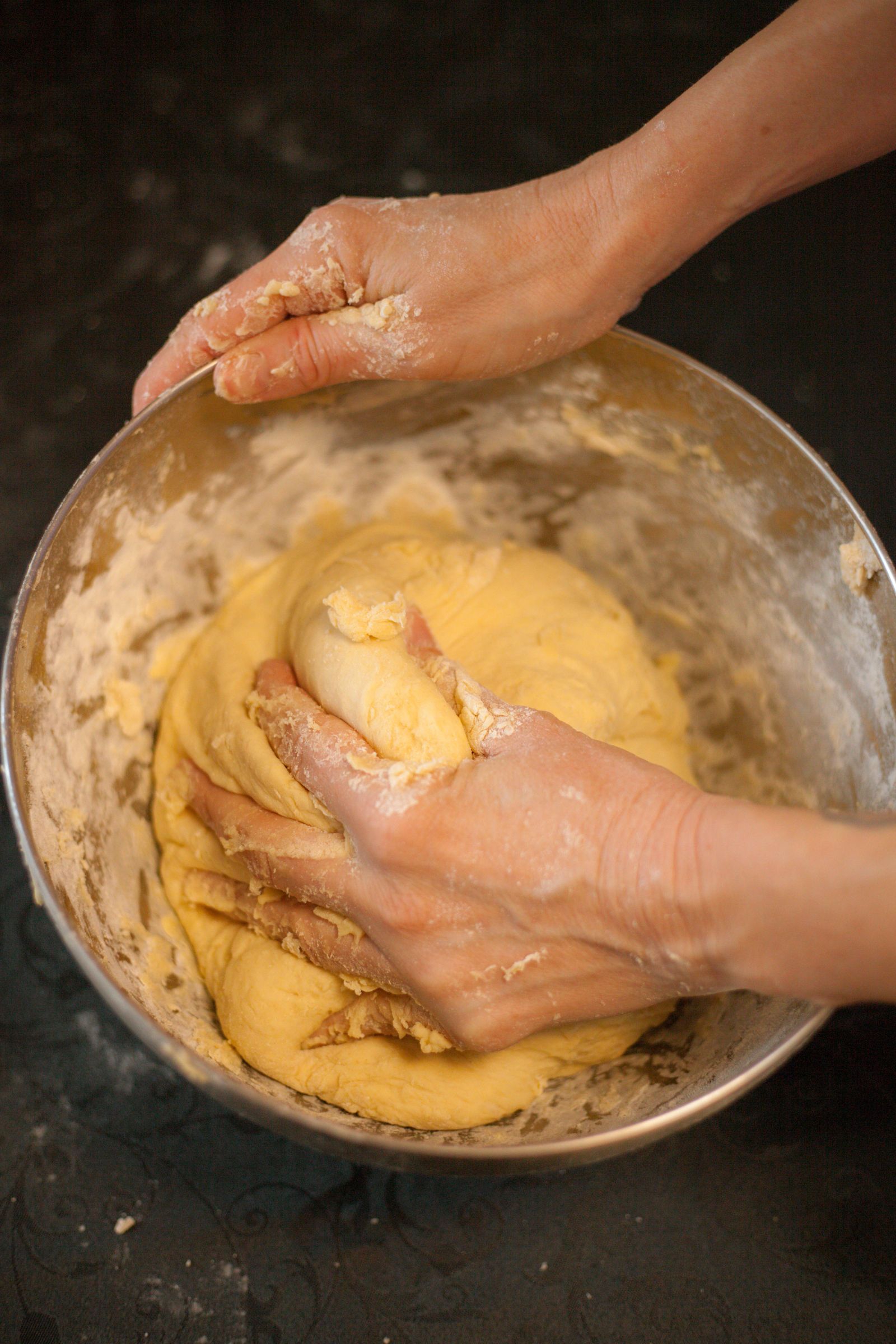
Whisk the flour and warm water together in the bowl until no dry flour remains. Cover and rest 30 minutes — this hydrates the flour and makes the dough dramatically easier to work. Then add the starter and salt, and mix by hand, squeezing and folding until everything is fully incorporated and the dough looks shaggy but uniform. Cover and rest 30 minutes more.
Step 2: Bulk Fermentation (3–5 hours)
Bulk fermentation is where the flavour and rise are built. Keep the covered bowl somewhere around 75°F if you can; King Arthur Baking's guidance for this stage is roughly 3–5 hours at room temperature, aiming for a dough temperature near 76°F. During the first 2 hours, give the dough 4 sets of stretch-and-folds, about every 30 minutes: with a wet hand, reach under the dough, stretch one side up and fold it over, rotate the bowl, and repeat 4 times. The dough will transform from shaggy to smooth and elastic.
End bulk when the dough has risen roughly 50–75%, looks puffy with a few bubbles at the surface, and jiggles when you nudge the bowl. Beginners under-ferment far more often than they over-ferment — a loaf that comes out dense is usually a bulk that was cut short (our dense and gummy diagnosis shows how to tell).
Step 3: Shape and Cold Proof (overnight)
Tip the dough onto a lightly floured counter. Fold the edges into the centre, flip it seam-side down, and drag it gently toward you in small circles to build surface tension — the skin should go smooth and taut without tearing. Place it seam-side up in your floured basket or towel-lined bowl, cover, and refrigerate 12–14 hours. The cold proof develops flavour and makes scoring far easier. Short on fridge space or time? Our baking schedule guide has a same-day version of this loaf.
Step 4: Bake (45–50 minutes)
Put your Dutch oven or combo cooker in the oven and preheat at 500°F for a full 30–45 minutes — a screaming-hot pot is what gives you oven spring. Turn the cold dough out onto parchment, score the top about ½ inch deep with a lame or sharp knife (one confident slash is plenty; see the scoring section of our bread lame guide), and lower it into the pot on the parchment. Bake covered for 20 minutes, then remove the lid and bake 25–30 minutes more until the crust is a deep mahogany brown — pale bread tastes underbaked, so push the colour further than feels safe. The inside should reach 205–210°F. Lodge's total bake time for this loaf is 45–50 minutes, which matches the split above.
Step 5: Cool — This Step Is Not Optional
Move the loaf to a wire rack and wait at least 2 hours before slicing. Inside, the crumb is still setting and full of steam; cutting early traps that moisture and turns the interior gummy no matter how well you fermented. This single act of patience fixes more "gummy loaf" complaints than any recipe change.
5 Beginner Mistakes This Recipe Avoids
- Using starter past its peak. A starter that rose and collapsed is acidic and weak. Feed it, and mix your dough when it is at or just before its highest point.
- Clock-watching the bulk. Times here are a range on purpose. Read the dough (rise, puffiness, jiggle), not just the timer.
- Skipping the preheat. A lukewarm pot means a loaf that spreads instead of springs.
- Scoring timidly. A shallow scratch seals shut. Half an inch deep, one stroke.
- Slicing warm. See Step 5. Two hours. Every time.
What Success Looks Like (and Two Easy Variations)
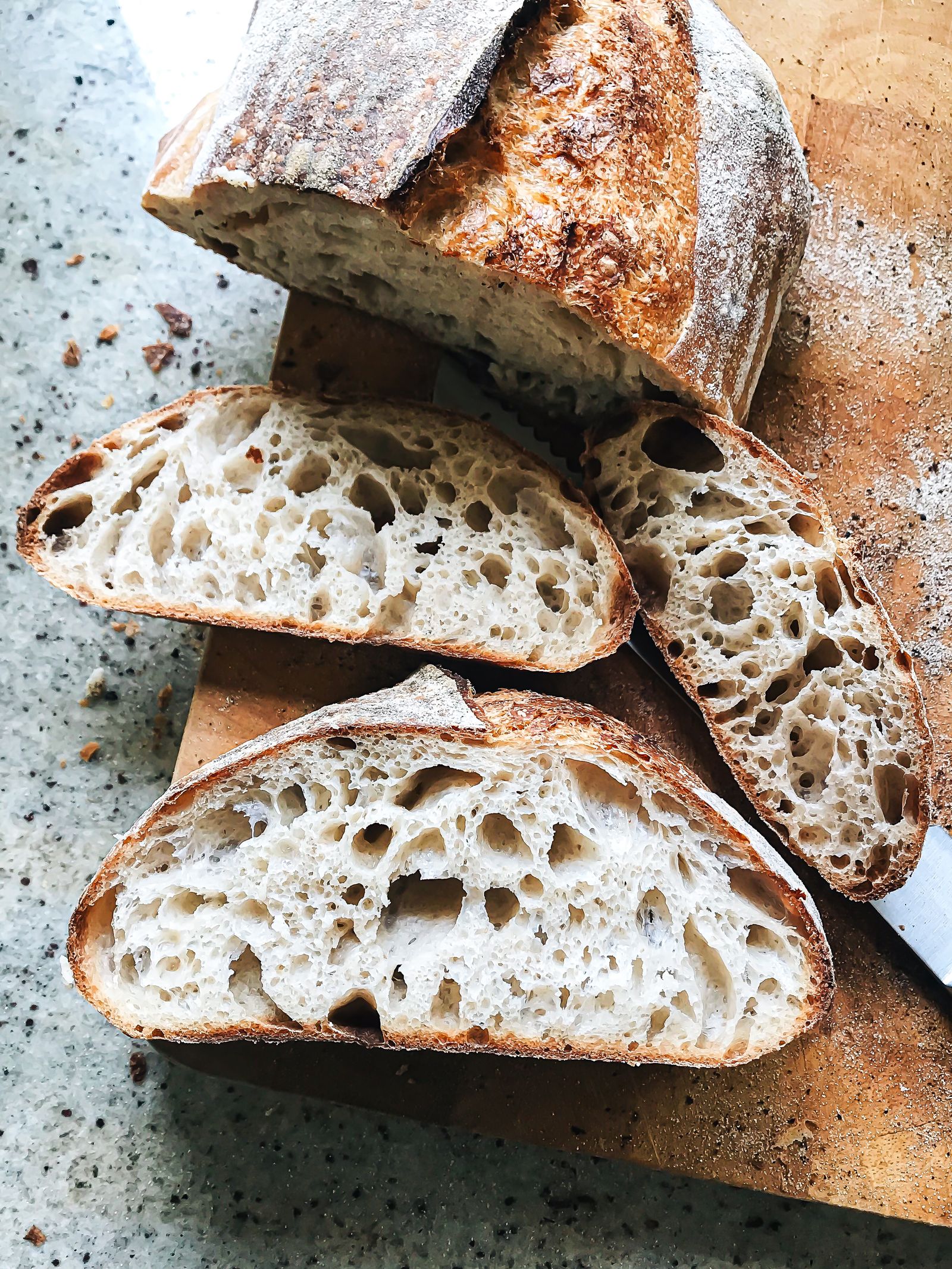
A good first loaf springs up in the pot rather than spreading, wears a deep golden-brown crust that crackles faintly as it cools, and slices to reveal an even crumb with holes of mixed sizes — not the dramatic open lace of bakery photos, and it does not need to be. If yours matches that description, you have a working loaf and a baseline to improve from. Two variations once the plain loaf is reliable: the 10% whole grain loaf — swap 50g of the bread flour for whole wheat or rye for flavour and a slightly faster ferment (watch the bulk, it may finish 30 minutes early); and the seeded loaf — add 50g of mixed seeds soaked in 50g of hot water for an hour, folded in with the salt. Both use the same timeline, the same pot, and the same patience at slicing time.
Frequently Asked Questions
Can I bake this without a Dutch oven?
Yes, with lower expectations: bake on a preheated baking steel or stone with a deep roasting pan inverted over the loaf for the first 20 minutes to trap steam. The crust will be good; the Dutch oven version is better and more consistent, which is why it is the default here.
My starter is only a week old. Can I bake?
If it doubles within 4–8 hours of a feed, two feeds in a row, yes. Expect a decent loaf, not a spectacular one — young starters gain strength over their first month. If it is not doubling reliably yet, fix that first with our starter not rising guide.
Can I use all-purpose flour instead of bread flour?
You can, and the loaf will still be good — just expect slightly less height and a softer dough that spreads a bit more. Reduce the water by about 20g to compensate. Bread flour's higher protein (around 12.7% for King Arthur) is the easier path for this recipe.
How do I store the loaf?
Cut side down on a board for the first day, then in a bread bag or box at room temperature for up to 3 days. Never refrigerate baked bread — it stales it fast. For longer storage, slice and freeze; slices toast straight from frozen.


Comments
Post a Comment
Play nice — spam and promo links are deleted.