Best Kitchen Scale for Sourdough Baking (2026 Picks)
CrumbPath is reader-supported. When you buy through links on our site, we may earn an affiliate commission — at no extra cost to you.
If you buy one tool for sourdough baking, make it a kitchen scale. Sourdough recipes work in grams for a reason: a cup of flour can weigh anywhere from 120g to 150g depending on how you scoop it, and that 30g swing is the difference between a well-fermented loaf and a dense one. A scale removes the guesswork from starter feedings, dough mixing, and dividing loaves — and a good one costs less than a bag of good flour.
The short answer
The best kitchen scale for most sourdough bakers is a simple flat digital scale with 1g precision, at least 5kg (11 lb) capacity, a tare button, and a stainless steel platform — the kind sold by OXO, Escali, and Salter in the $25 to $50 range. You do not need 0.1g precision for bread, though it helps if you also weigh yeast or salt for small batches. Avoid scales with tiny platforms that cannot hold a mixing bowl, auto-off timers shorter than two minutes, and novelty features like calorie counting that get in the way of the one job that matters: showing you an accurate weight, fast, every time. Below are the picks that fit sourdough baking specifically, not general kitchen use, with the honest trade-offs of each.
What a sourdough scale actually needs
1g precision, not 0.1g. Bread ingredients are weighed in tens and hundreds of grams. A scale accurate to 1g is plenty for flour, water, starter, and salt in a loaf. The 0.1g models cost more and are only worth it if you regularly weigh very small amounts, like 2g of yeast for a tiny test batch.
At least 5kg capacity. A mixing bowl plus 500g of flour, 360g of water, and 100g of starter already totals around 1.5kg, and a double batch with a heavy ceramic bowl can pass 3kg. A 5kg scale covers every home sourdough job with room to spare. Scales capped at 3kg will overload on a big batch.
A tare button that is easy to hit. You will press tare constantly — bowl on, tare, flour in, tare, water in, tare, starter in. The button should be large, responsive, and reachable without moving the bowl. Touch-sensitive buttons that need a precise tap are annoying with floury hands.
A platform bigger than your bowl's base. A small platform under a large bowl makes the bowl wobble and can hide the display. Look for a platform around 15cm square or larger, or a scale with the display pulled forward so the bowl does not cover it.
A sane auto-off time. Some scales switch off after 60 seconds, which is maddening mid-recipe when you pause to fetch an ingredient. Two minutes is the minimum worth having; four or five minutes is better. This single detail ruins more scales than any accuracy problem.
Easy cleaning. Flour dust gets everywhere. A stainless steel platform wipes clean in seconds; a plastic body with seams traps flour. Removable platforms are a bonus, not a requirement.
The picks
Best overall: OXO Good Grips stainless scale
The OXO is the scale most sourdough bakers end up with, and for good reason. It reads in 1g increments up to 5kg, has a pull-out display so a large bowl never hides the weight, and its auto-off is long enough to survive a real recipe. The stainless platform wipes clean and the whole unit is slim enough to store upright in a drawer. Its weakness is price: it usually costs more than the budget picks below, and it runs on AAA batteries rather than USB charging. For a scale you will use several times a week for years, that premium is worth paying. Check the OXO scale on Amazon.
Best budget pick: Escali Primo digital scale
The Escali Primo is the classic budget recommendation for a reason: it is accurate to 1g up to 5kg, dead simple with two buttons, and usually costs about half the OXO. Bakers praise its reliability and its long auto-off delay of around four minutes. The trade-offs are a smaller platform that can be awkward under a big mixing bowl, and a display that a large bowl can hide. If you mix in a medium bowl or weigh ingredients into a smaller container first, the Primo is all the scale you will ever need. Check the Escali Primo on Amazon.
Best for small batches: Salter high-precision scale
If you bake small test loaves, weigh yeast and salt separately, or also use the scale for coffee and spices, a 0.1g-precision model earns its place. Salter's high-precision kitchen scales typically offer 0.1g increments up to 2 to 3kg, which is plenty for a single loaf but can overload on a double batch in a heavy bowl. Buy this one as a second scale for precision work, not as your only scale, unless you always bake small. Check Salter precision scales on Amazon.
Best rechargeable: Etekcity food kitchen scale
The Etekcity is the pick for bakers who are tired of buying batteries. It charges over USB, reads to 1g up to 5kg, and has a slim stainless platform that stores easily. Its display is clear and the tare button is responsive. The main complaint in long-term use is a shorter auto-off than the Escali, so it suits bakers who work briskly rather than pausing mid-recipe. For the price — usually in the same budget band as the Escali — the rechargeable battery is a genuine quality-of-life upgrade. Check the Etekcity scale on Amazon.
Best for big batches: Ozeri Pronto digital scale
The Ozeri Pronto is a wide-platform scale with 1g precision up to 5kg, and its larger surface handles big bowls and double batches without wobble. It is also one of the cheapest reliable scales available, which makes it a good second scale for a baking station or a gift for a new baker. Its auto-off is shorter than the Escali's, and the button layout takes a day to learn, but for pure capacity per dollar it is hard to beat. Check the Ozeri Pronto on Amazon.
Comparison table
| Scale | Precision | Capacity | Best for | Watch out for |
|---|---|---|---|---|
| OXO Good Grips | 1g | 5kg | Most sourdough bakers | Higher price, AAA batteries |
| Escali Primo | 1g | 5kg | Budget buyers | Small platform, display can hide under big bowls |
| Salter high-precision | 0.1g | 2–3kg | Small batches, yeast and salt | Overloads on double batches |
| Etekcity rechargeable | 1g | 5kg | No more batteries | Shorter auto-off |
| Ozeri Pronto | 1g | 5kg | Big batches, second scale | Shorter auto-off, button learning curve |
What about AliExpress scales?
AliExpress lists plenty of kitchen scales at prices well under the Amazon picks above, often with 0.1g precision and USB charging included. The value is real, but so are the risks for this particular tool. Accuracy claims on unbranded scales are inconsistent — a scale that reads 1g off at 500g will quietly ruin your dough math — and returns are slow if the unit arrives faulty or miscalibrated. For a tool whose entire job is accuracy, buying a known brand with a warranty and easy returns is worth the extra few dollars. If you do buy from AliExpress, check the scale against a known weight (a new, unopened 500g bag of flour or a set of calibration weights) the day it arrives, and keep the branded pick as your reference until you trust it. We link no AliExpress products here; our affiliate links go to Amazon, where returns and buyer protection are straightforward.
How to use a scale for sourdough
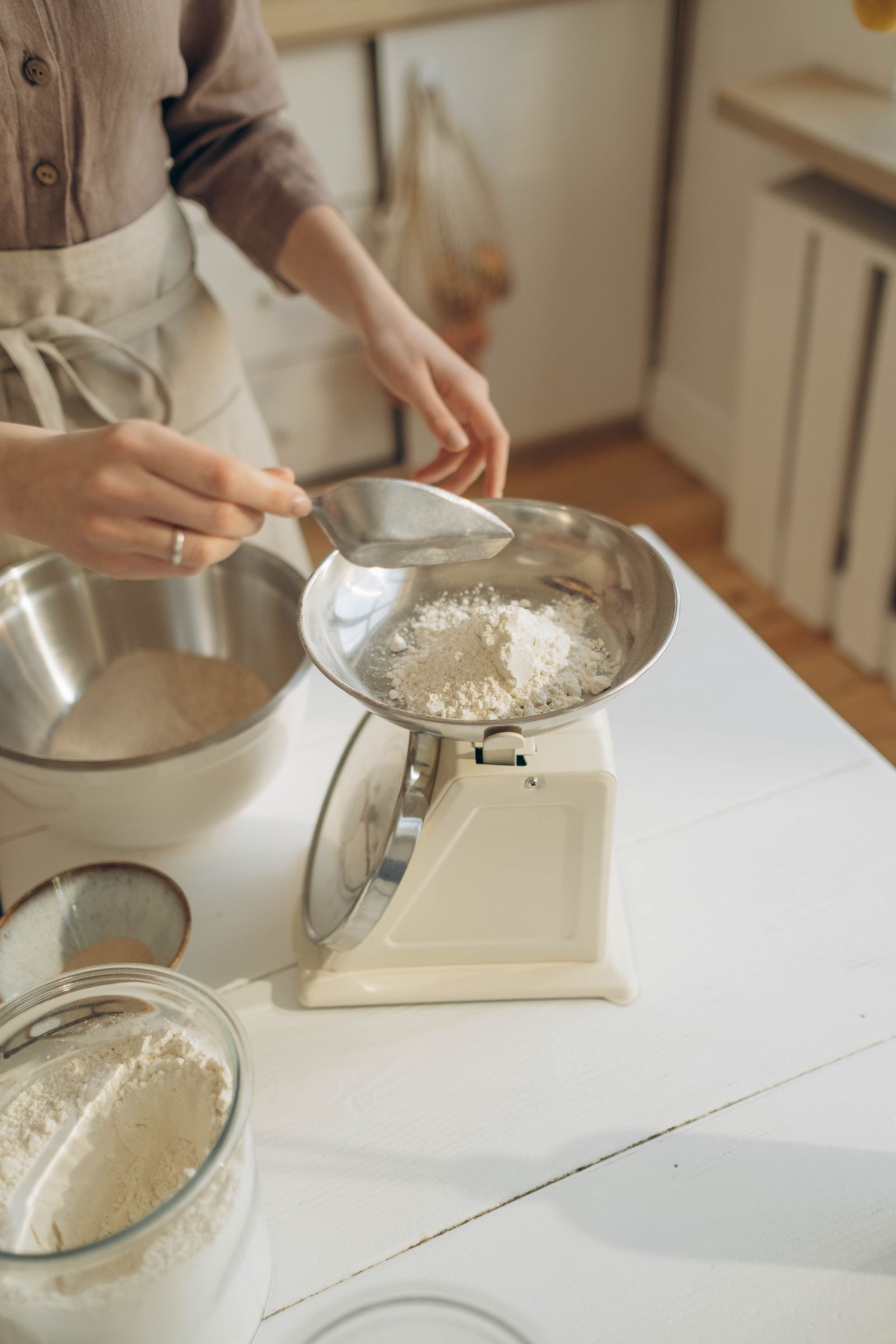
Put your bowl on the scale, press tare, and add flour until the display shows your target — 500g for a standard loaf. Press tare again, add water to 360g, tare again, add starter to 100g, tare again, add salt to 12g. That is the whole technique, and it is why sourdough bakers weigh everything: one bowl, no measuring cups, no washing between ingredients. The same routine works for feeding your starter — keep 50g, add 50g of flour, add 50g of water — which is why our starter guide and our beginner bread recipe are both written in grams throughout. If you are still feeding or mixing by cups, switching to a scale will improve your bread more than any new Dutch oven or banneton — and our flour guide explains why the flour you weigh matters as much as the weight itself.
What to skip
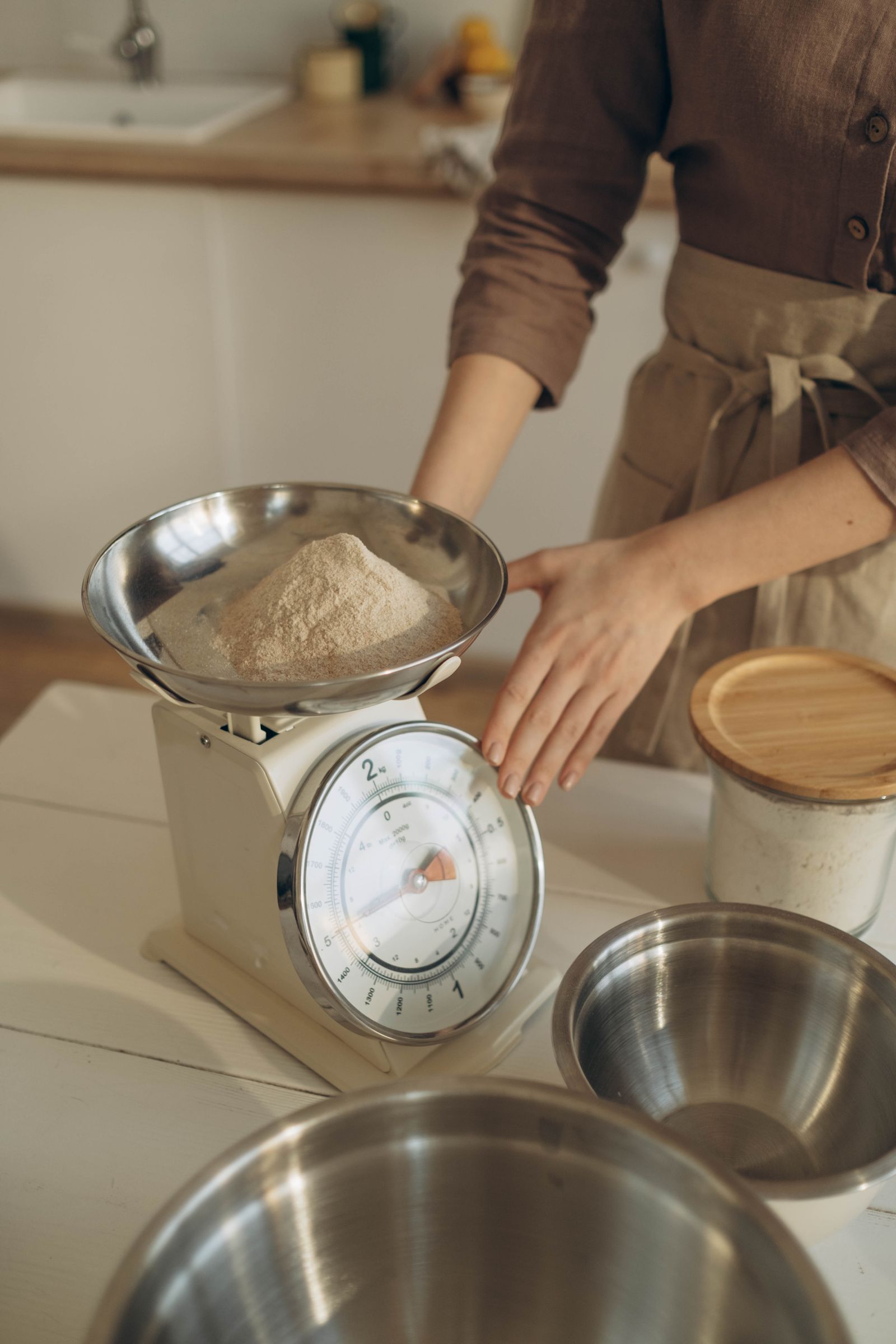
Skip scales with a bowl included unless you actually want the bowl — the bundled bowls are usually small and the scale underneath is rarely better than a flat one. Skip "smart" scales with apps and nutrition tracking: the app adds nothing to bread baking and the scale usually costs more while doing the core job worse. Skip mechanical dial scales for sourdough: they are charming, but their 20 to 25g increments are far too coarse for starter feedings and salt. And skip any scale whose capacity is under 3kg — it will overload the first time you mix a double batch in a heavy bowl.
The verdict
Buy the OXO Good Grips scale if you want the best all-round sourdough scale and you bake weekly or more — the pull-out display and long auto-off remove the two most common frustrations. Buy the Escali Primo if you want the same accuracy for less money and you mix in a medium bowl. Add a 0.1g Salter only if you regularly weigh tiny amounts for test batches. Whichever you choose, the real upgrade is not the brand — it is switching from cups to grams. That one change makes every recipe repeatable, every feeding consistent, and every loaf a little more predictable, which is the whole point of a scale in the first place.
Once the scale is on your counter, put it to work: our baking schedules are written around weighed ingredients and timed feeds, and our starter kit guide covers the other tools — jars, thermometers, and scrapers — that pair with a scale in a complete sourdough setup.


Comments
Post a Comment
Play nice — spam and promo links are deleted.