Best Sourdough Starter Jars (2026 Picks)
CrumbPath is reader-supported. When you buy through links on our site, we may earn an affiliate commission — at no extra cost to you.
The best sourdough starter jar for most bakers is a wide-mouth glass jar with straight sides, a loose-fitting lid, and clear measurement markings — and the classic choice, a 1-litre Weck tulip jar, ticks all three boxes. The jar you keep your starter in matters more than most beginners expect: straight sides make feeding and cleaning easy, a wide mouth lets you stir without smearing starter up the walls, and a loose lid lets gas escape while keeping the culture safe. After years of jars that were too narrow, too small, or sealed too tightly, here is what actually works.
Why does the jar matter at all? A starter lives in its jar for years, and you interact with it daily. A narrow-necked jar turns every feeding into a scraping exercise, and starter dried onto shoulders and threads is a mould risk. A jar that is too small overflows at peak and leaves a mess. A jar sealed airtight can build pressure or trap too much moisture. The right jar removes friction from a daily habit, and that is worth getting right.
What to Look for in a Starter Jar
Size first: a 1-litre (roughly 32-ounce) jar suits a typical home starter fed at 50 to 100 grams of flour per feeding, giving room for the culture to double or triple without overflowing. Smaller 500 ml jars work if you keep a small starter, but they overflow the first time you forget a feeding. Go bigger only if you bake in bulk.
Straight sides beat curved ones, because you can scrape the walls clean and see the rise clearly. A wide mouth, at least 8 cm across, is non-negotiable for stirring and cleaning. Glass beats plastic: it does not stain, it does not hold odours, and you can see the bubbles and the rise line through it. For the lid, choose something that rests on top rather than sealing tight — a glass lid, a loose plastic cap, or even a cloth cover secured with a band all work. A fully sealed screw lid traps gas and can pop off or stress the jar.
Measurement markings are a genuine help. A jar with millilitre markings, or one you mark yourself with a rubber band at feeding time, lets you see at a glance whether your starter doubled. That visual cue is the single easiest way to learn your starter's rhythm, as our troubleshooting guide explains.
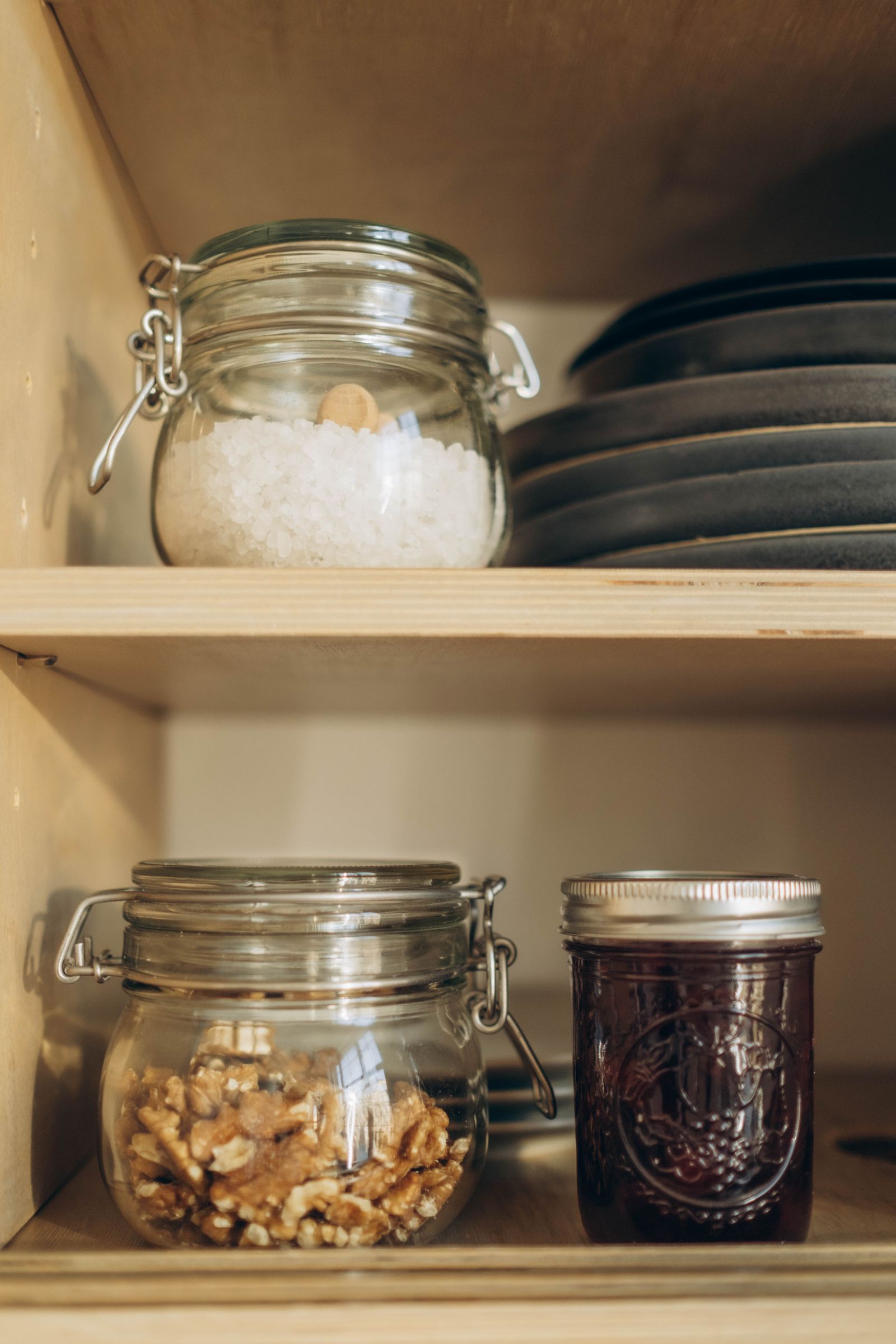
Comparison: 5 Starter Jars Compared
| Jar | Size | Why it works | Watch out for | Best for |
|---|---|---|---|---|
| Weck tulip jar | 1 litre | Straight sides, wide mouth, glass lid rests loose, classic sourdough choice | Glass lid can chip if dropped; clips not needed and should be left off | Most bakers |
| Kilner clip-top jar | 1 litre | Excellent glass, wide mouth, rubber seal; leave the clip undone during fermentation | Clip must stay open or gas builds up; seal needs replacing yearly | Bakers who like a tidy jar |
| Wide-mouth mason jar | 946 ml (32 oz) | Cheap, everywhere, straight sides on the wide-mouth version; lid rests loose | Standard mason jars narrow at the shoulder — buy wide-mouth only | Budget pick |
| Le Parfait Super jar | 1 litre | Beautiful thick glass, very wide mouth, orange seal looks the part | Pricier; same clip-open rule applies | Gift or display-worthy pick |
| Graduated sourdough jar set | 2 x 750 ml | Printed measurement bands, thermometer strip, cloth cover included | Some sets use thin glass; markings can fade in the dishwasher | Beginners who want markings |
Links below go to Amazon search results for each jar type, so you can compare current sellers and prices rather than a single listing that may go out of stock:
- Weck tulip jars on Amazon
- Kilner clip-top jars on Amazon
- Wide-mouth mason jars on Amazon
- Le Parfait jars on Amazon
- Graduated sourdough jar sets on Amazon
AliExpress, Evaluated
AliExpress sells Weck-style and graduated starter jars at noticeably lower prices than Western retailers, often in multi-packs, and for a second or third jar they can be good value. The trade-offs are real, though: glass thickness and seal quality vary between sellers, shipping takes weeks, and a chipped jar cannot be returned as easily as an Amazon order. For your one main starter jar — the jar you use every day — buy from a seller with a clear returns policy and check recent buyer photos for glass quality before ordering. For spare jars, the savings are genuine. We link only to Amazon search results in this article, because AliExpress listings change frequently and we do not want to point you at a dead or switched listing.
Verdict: Which Jar Should You Buy?
Buy the 1-litre Weck tulip jar. It is the jar most experienced sourdough bakers end up with after trying the alternatives: straight sides, a mouth wide enough to stir and scrape, and a glass lid that sits loose rather than sealing. If budget is the priority, a wide-mouth mason jar does 90 percent of the same job for a fraction of the price — just be sure it is the wide-mouth version, not the shouldered standard jar. Beginners who want the measurement markings built in should look at a graduated jar set, and treat the markings as a learning aid rather than a necessity; a rubber band on any jar does the same job.
Whatever jar you choose, pair it with good habits. Feed on a consistent schedule, scrape the walls clean after feeding, and keep a second jar on hand so you can transfer to a clean jar weekly. A clean jar is a healthy starter, and a healthy starter is the whole game. Our feeding guide covers ratios and fridge storage, and if your starter is sluggish in its new jar, our not-rising diagnosis will help you fix it. If you are just starting out, our starter-from-scratch guide and our starter kit guide cover the rest of the setup.
How Many Jars Do You Need?
Two is the sweet spot for most bakers: one in active use and one clean spare for the weekly swap. A third jar earns its place if you keep a backup starter in the fridge or dry starter flakes for emergencies, but beyond that you are collecting glassware, not improving your bread. If counter space is tight, one jar plus a disciplined weekly wash is perfectly fine — the second jar is a convenience, not a requirement. What matters is that the jar you use is the right shape and size, not how many you own.
Keeping Your Jar Clean
Transfer your starter to a clean jar once a week. Dried starter on the rim and threads is the most common source of mould in an otherwise healthy culture, and a weekly swap takes two minutes. Soak the dirty jar in warm water and the residue dissolves easily; avoid abrasive scrubbers on measurement markings. Never put a jar with starter in the dishwasher while the starter is in it, obviously, but empty jars can go through the dishwasher fine — just check printed markings afterwards, since some fade with repeated hot washes.
The jar is a small purchase, but it is one you live with daily. Pick straight sides, a wide mouth, a loose lid, and a litre of room, and your starter will be easier to feed, easier to read, and easier to keep healthy for years.


Comments
Post a Comment
Play nice — spam and promo links are deleted.